- News Without BS
- Posts
- From Discord to Disorder
From Discord to Disorder
How Gen Z in Nepal turned a gaming chat into a political revolution.

Devin
September 13, 2025
It may be the weekend, but the news cycle doesn’t do days off. While most people are recharging, we’re still here digging through the noise to bring you what actually matters.
Grab your coffee, kick back, and let’s run through the headlines without the BS.
The Caribbean Just Got Hotter
The U.S. military just sank a speedboat off Venezuela and killed 11 people. Officials said it was a drug boat tied to Tren de Aragua, a violent Venezuelan gang. But here’s the twist. According to new AP reporting, the vessel had already turned back toward shore when the missiles came in. There’s also no confirmed proof it was Venezuelan or that anyone onboard belonged to the gang. That’s not exactly an airtight case.
Washington insists this is part of its war on drug trafficking. Lawmakers at home aren’t convinced. Some are asking whether the military is now doing police work on the high seas. Caracas, unsurprisingly, calls it murder. They’ve even claimed U.S. footage of the strike might be AI-generated. Welcome to 2025, where deepfakes are part of international diplomacy.
This didn’t come out of nowhere. Over the past few weeks, the Trump administration has gone all in on Venezuela. U.S. warships are prowling the Caribbean. Fighter jets are flying missions. And the State Department doubled the bounty on President Nicolás Maduro’s head to $50 million, the highest ever on a sitting leader. The gang allegedly tied to the boat was already labeled a terrorist group back in February.
Maduro is playing it up. He’s sent troops to borders, recruited militia members, and staged flyovers of U.S. ships. He’s also declared Christmas early, because when you’re under pressure, why not crank up the pageantry.
Bottom line: this is the tensest U.S.–Venezuela standoff in years. The strike made it a lot harder for either side to quietly step back. And with both governments doubling down, expect the drama to get louder before it gets calmer.

Rapid Fire
🛢️Ukraine just pulled off one of its boldest strikes of the war. Drones hit Primorsk, Russia’s largest oil terminal on the Baltic Sea, forcing a temporary halt in crude operations. This isn’t just another refinery fire. Primorsk handles around 60 million tons of oil a year, worth about $15 billion, and serves as the end point of the Baltic pipeline system. It’s also a key hub for Russia’s “shadow fleet” of aging tankers that sneak around sanctions. In other words, Kyiv didn’t just hit a port. It hit the cash register.
The strike marks one of Ukraine’s deepest shots into Russian territory, nearly 1,000 kilometers from the front lines, and follows last week’s drone attack on a major refinery near Moscow. Taken together, these aren’t random pinpricks. They’re part of a strategy to squeeze Russia’s economy while undercutting its ability to fund the war. And with Europe watching nervously, given how much of its own energy security is tied to Russian exports, every hit on an oil facility ripples far beyond the battlefield.
🤝 Iran says it’s on the verge of a prisoner swap deal with France. Foreign Minister Abbas Araghchi announced that talks are in their “final stages,” with an agreement that would free Mahdieh Esfandiari, a 39-year-old Iranian translator living in Lyon, in exchange for two French citizens detained in Iran. Esfandiari was arrested in February on terror-related charges after posting on Telegram in support of the October 7 attacks, which French prosecutors labeled “apologie du terrorisme.” Her case quickly became a rallying cry for activists who see her detention as punishment for pro-Palestinian speech.
Paris isn’t as enthusiastic. France has demanded the immediate and unconditional release of three of its citizens held in Iran, pushing back against a straight swap. The tension reflects bigger fault lines: Iran wants to frame the case as a free-expression issue tied to Gaza, while France has cracked down hard on speech it deems glorifying terrorism. At the same time, France faces criticism at home for blurring that line too aggressively. Iran, meanwhile, is accused of using detained foreigners as bargaining chips. If this swap goes through, it won’t just free prisoners, it will mark a rare moment of compromise between Tehran and Paris at a time when both sides are dug in on almost everything else.
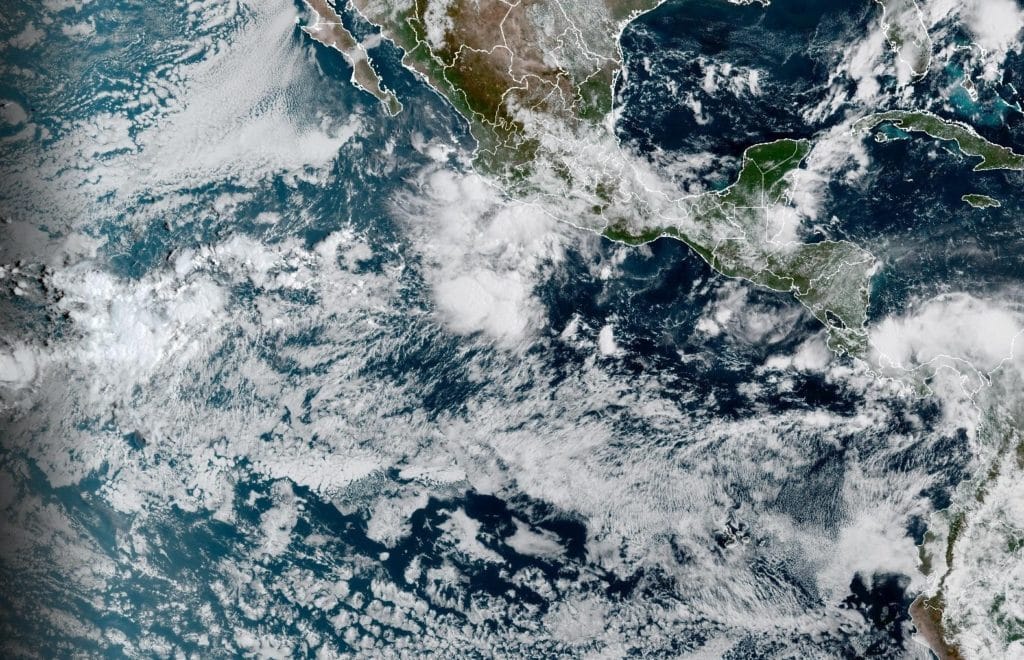
🌀Tropical Storm Mario has formed off Mexico’s Pacific coast and is expected to bring several days of heavy rainfall, strong winds, and dangerous coastal conditions to southern Mexico from September 12 through September 15. The storm, currently off the coasts of Guerrero and Michoacán, developed from Tropical Depression Thirteen-E and is strengthening. According to Mexico’s National Weather Service (SMN), Mario’s circulation, combined with a persistent coastal monsoon, will generate thunderstorms, squalls, and high waves, creating a significant risk of flooding in vulnerable areas.
The states of Guerrero and Michoacán are most at risk, though neighboring regions could also be affected. Forecasts warn that rainfall may intensify over the national holiday weekend, raising the potential for flash floods and landslides. Authorities are urging residents in low-lying or exposed communities to remain alert, follow official bulletins, and prepare for possible evacuations. While Mario is not classified as a major hurricane, its combination of prolonged rainfall, storm surges, and hazardous seas represents a serious threat to southern Mexico in the days ahead.
World Watch
Gen Z protesters in Nepal just toppled their prime minister and then picked his replacement in a Discord chat. After days of violent clashes that left at least 30 people dead, demonstrators forced KP Sharma Oli and his cabinet to resign. In the aftermath, more than 100,000 young Nepalis gathered in a Discord server dubbed the “Parliament of Nepal.” The crowd swelled to 145,000 members and voted to nominate former chief justice Sushila Karki as interim leader. For the first time, a country’s political future is being debated in the same digital halls where people usually argue about video games.
The Discord parliament didn’t emerge from nowhere. Nepal’s youth have been seething over sky-high unemployment, entrenched corruption, and a parade of unstable governments. A viral “Nepo Kids” campaign mocking politicians’ privileged children fueled the anger, and when the government banned social media earlier this month, it backfired spectacularly. Protesters moved to Discord, where they didn’t just coordinate marches, they started crowdsourcing governance. Now the army controls Kathmandu, talks are underway with generals and political leaders, and Nepal stands as the first case study of a digital-age revolution where protesters overthrew a government and drafted its successor in a chatroom.
Today in What the Hell
Scam centers tied to international crime syndicates are setting up in East Timor, according to a new UN report. The Oecusse free trade zone, launched just last year, has become a hotspot. In August, authorities raided one suspected hub and detained more than 30 foreign nationals. These aren’t petty cons, investigators say they’re large compounds using satellite internet and thousands of SIM cards to run online fraud, gambling scams, and even human trafficking schemes.
The shift into East Timor mirrors a wider regional trend. As crackdowns in Cambodia, Laos, and Myanmar squeeze crime syndicates, they’re moving into states with lighter oversight. Oecusse’s investment zone, meant to attract digital growth, is instead drawing shell companies and organized crime. For East Timor, already struggling economically and preparing to join ASEAN, the spread of scam centers is both a security risk and a stress test of state capacity.

That’s all folks
That’s all for today. The stories might feel heavy, wars, storms, scams, but they also show how fast the world is shifting and how people adapt in ways governments never see coming. Stay curious, stay sharp, and remember: paying attention is its own kind of power.