- News Without BS
- Posts
- Lights Down, Stories On

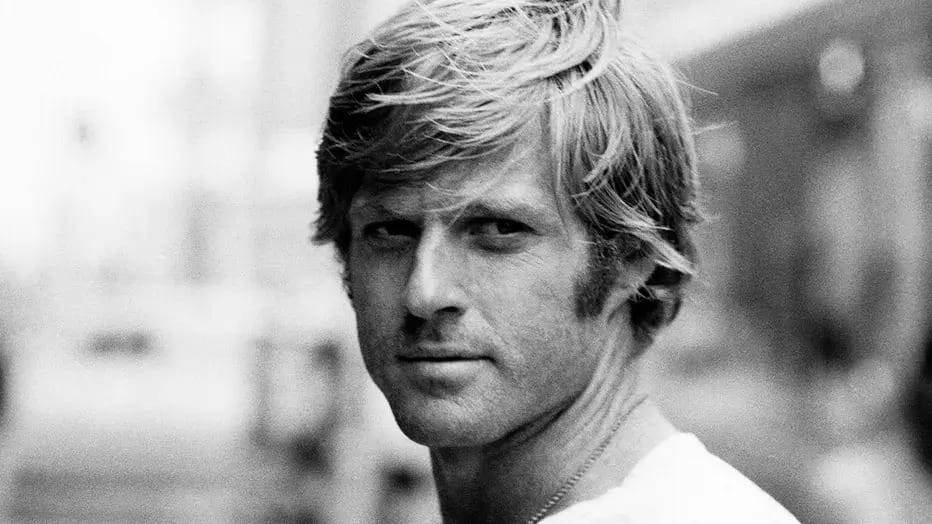
Robert Redford died yesterday at 89, closing the curtain on one of Hollywood’s true giants. He wasn’t just the charming outlaw in Butch Cassidy or the crusading journalist in All the President’s Men, he was the founder of Sundance, the festival that turned indie film into a global force.
His legacy is a reminder that storytelling can shape culture long after the lights go down.
With that, let’s turn to the stories shaping today’s world.
When the Front Door’s Locked, Try Ghana
The Trump administration just pulled off a legal win in its fight to deport West Africans. A federal judge in D.C. said her hands were tied and she couldn’t stop four men from being sent to Ghana, even though U.S. immigration judges had already ruled those men risk torture or persecution if sent home. The catch? They weren’t headed straight home. They were going to Ghana first, where authorities could then pass them along to Nigeria or Gambia. Think of it like using the side door after the front one was padlocked.
Immigration lawyers call this “third country deportation.” That’s the polite term. Critics prefer “shadow deportation.” The idea is simple and brutal: if U.S. courts say you can’t send someone directly back into danger, you send them somewhere else and let that country handle the messy part. In this case, Ghana agreed to play middleman. Fourteen deportees have already been flown out under the new setup.
This isn’t small potatoes. Reports say the U.S. is pushing similar deals with at least 50 countries, many with their own conflict or terrorism problems. The Supreme Court even cleared the way this summer by lifting an injunction that once gave people 15 days’ notice before deportation. That buffer mattered. It gave immigrants time to call lawyers, gather evidence, and at least make their case. Without it, people can be put on a plane to places they’ve never lived, don’t speak the language, and have no safety net.
The administration calls this enforcement. Opponents call it dismantling asylum protections. Either way, it shows how far the U.S. is willing to go to keep deportations moving, even if it means outsourcing the risk.

Rapid Fire
🤷♂️ After Israel shocked the region with an airstrike in Doha, Secretary of State Marco Rubio tried to steady the ship. On his way to Qatar, Rubio told reporters the U.S. and Qatar are close to finalizing a new defense agreement. The timing isn’t accidental. Israel just carried out its first-ever strike on Qatari soil, targeting Hamas leaders in a government compound. Qatar blasted it as cowardly and treacherous, and suddenly the one country still able to mediate between Israel and Hamas looked like it could walk away from the table.
Rubio’s message was clear: Washington needs Qatar to stay in the game. By locking in a defense pact, the U.S. is signaling it will back Doha even as it absorbs Israeli firepower. That keeps Qatar in the role of mediator, reassures nervous Gulf partners, and buys the U.S. leverage in a moment when Gaza ceasefire talks are hanging by a thread.
The balancing act is delicate, support Israel, keep Qatar close, and somehow keep negotiations alive.
🇸🇸 South Sudan’s fragile peace is cracking wide open. President Salva Kiir has suspended his First Vice President, Riek Machar, after prosecutors charged him with murder, treason, and crimes against humanity.
The case stems from a March assault in Upper Nile state, where a militia known as the White Army overran a government garrison, killing more than 250 soldiers, including its commander. Officials say Machar and 20 others helped orchestrate the attack. The opposition, not surprisingly, is telling its supporters to mobilize.
If this sounds familiar, it’s because it is. In 2013, Kiir also pushed Machar out, accusing him of plotting a coup. That move sparked a civil war that killed roughly 400,000 people before a 2018 peace deal papered things over.
Now, with Machar back under house arrest and the transitional government effectively collapsed, the country is sliding toward the same abyss. The charges are grave, but the real danger is that history might be about to repeat itself.
🇲🇼 Malawi just held one of its most consequential elections in decades, and the votes are still being counted. Seventeen candidates are technically in the race, but it’s really a showdown between President Lazarus Chakwera, 70, and his predecessor Peter Mutharika, 85.
The backdrop is grim: inflation has spiked from single digits to nearly 30 percent, fuel shortages mean drivers camp out in long queues, and foreign currency has all but dried up. Add in food insecurity made worse by Cyclone Freddy in 2023 and an El Niño drought in 2024, and Malawians are staring down a brutal cost-of-living crisis.
This election is about whether voters give Chakwera another shot at fixing an economy that’s on life support or turn back to Mutharika for answers. The stakes are high. Malawi is still scarred from a 2019 presidential vote that was tossed out for irregularities, and a plane crash last year killed Vice President Saulos Chilima, adding even more instability.
For ordinary Malawians, the ballot boils down to one question: who can actually deliver relief in a country squeezed by inflation, fuel lines, and climate shocks?

World Watch
The Taliban just cut fibre optic internet in Afghanistan’s northern Balkh province, with the group’s leader Hibatullah Akhundzada calling it a way to “prevent immorality.” It’s the first time they’ve gone after internet infrastructure directly since retaking power in 2021.
The result? No high-speed access for government offices, schools, or businesses in a region that includes Mazar-i-Sharif, one of the country’s biggest commercial hubs. Workers and students were caught off guard, suddenly stripped of a basic tool that keeps modern economies and classrooms running.
The move fits a larger pattern. Since their return, the Taliban have rolled out bans on women’s education, work restrictions, and sweeping curbs on daily life. But targeting fibre optic cables marks a new stage, controlling not just what people can do, but what information they can even reach.
Cutting off Balkh isn’t just about policing “immorality.” It’s about tightening the lid on a population already isolated from much of the world, while dealing a serious blow to both the local economy and Afghanistan’s fragile ties to global systems.
Today in What the Hell
Two men in Zambia just got two years of prison with hard labor for trying to kill the president using witchcraft.
The evidence? Charms and a live chameleon.
They told the court someone promised them $1 million if their curse worked, and prosecutors even claimed a politician’s brother was behind the plot. It sounds like a bad movie pitch, but it played out in a real courtroom and the court brushed off pleas for leniency, making an example out of them.
The bigger twist is the law they were convicted under dates back to 1914, when Zambia was under British rule. It criminalizes even “pretending” to have supernatural powers, yet it’s still being used more than a century later.
That makes these cases tricky, how do you even prove a curse works, or doesn’t? This isn’t just bizarre. It’s a snapshot of how colonial-era laws, traditional beliefs, and modern politics all collide in today’s world.

That’s all folks
Plenty of turbulence out there, but remember, the world keeps moving forward even when the headlines feel stuck on repeat. Elections will pass, deals will be struck, and people will keep pushing for better lives in tough places.
So take the long view. Progress usually shows up slower than we want, but it shows up all the same.
See you back here tomorrow.