- News Without BS
- Posts
- Sunday’s Underbelly

Hope you’re getting a calm Sunday in before the week kicks back up. While the big outlets chase the same headlines, we’re here to flag the stories they’re glossing over or skipping entirely.
Pour the coffee, and let’s get into what actually matters today.
Unite the Kingdom or Split It?
London saw one of its biggest far-right gatherings in years today, as Tommy Robinson’s “Unite the Kingdom” rally drew an estimated 110,000 people, dwarfing the 5,000 who joined the counter-protest organized by Stand Up To Racism. Central London streets were filled with flags and chants, as Robinson, whose real name is Stephen Yaxley-Lennon, framed the march as a fight for free speech and defense of British culture.
But violence broke out quickly. Police reported “unacceptable” clashes as officers and horses tried to hold the line on Whitehall. Nine arrests were made, and extra riot squads had to be rushed in as Robinson’s supporters clashed with both counter-protesters and police.
This massive turnout didn’t come out of nowhere. It’s the latest flashpoint in a chain of unrest that began after the July 2024 Southport attack, when three young girls were killed and false claims about the attacker’s identity spread online. Robinson was central in amplifying those claims, fueling a week of riots that saw over 1,800 arrests and hundreds of police injured. Prosecutors investigated him for incitement, but his platform only grew.
Today’s rally shows just how much momentum he’s maintained. While his supporters see a patriotic stand, critics argue he’s doubling down on the same divisive narratives that lit the fuse last summer. With immigration and cultural tensions still raw, London’s streets once again became the stage for a volatile battle over Britain’s identity and the sheer size of Robinson’s march suggests this movement isn’t fading anytime soon.

Rapid Fire
🇳🇵Nepal is catching its breath after a week of deadly protests that left at least 51 people dead and forced Prime Minister KP Sharma Oli out of office. The government has now tapped former chief justice Sushila Karki as interim leader, making her Nepal’s first female prime minister, and dissolved parliament with fresh elections set for March 5. It’s the most dramatic political shake-up the country has seen in years, driven by frustration with a political elite seen as corrupt and out of touch.
Curfews in Kathmandu have been lifted and calm is returning to the streets, though some areas remain off-limits. The unrest, led largely by Gen Z, started with anger over a social media ban and quickly morphed into a full-blown uprising against corruption and inequality. The protests also exposed deep economic frustrations, especially among young people who see few job prospects at home and often migrate abroad for work. For now, the capital is quieter. But the March vote will test whether this calm holds or just sets the stage for the next eruption.
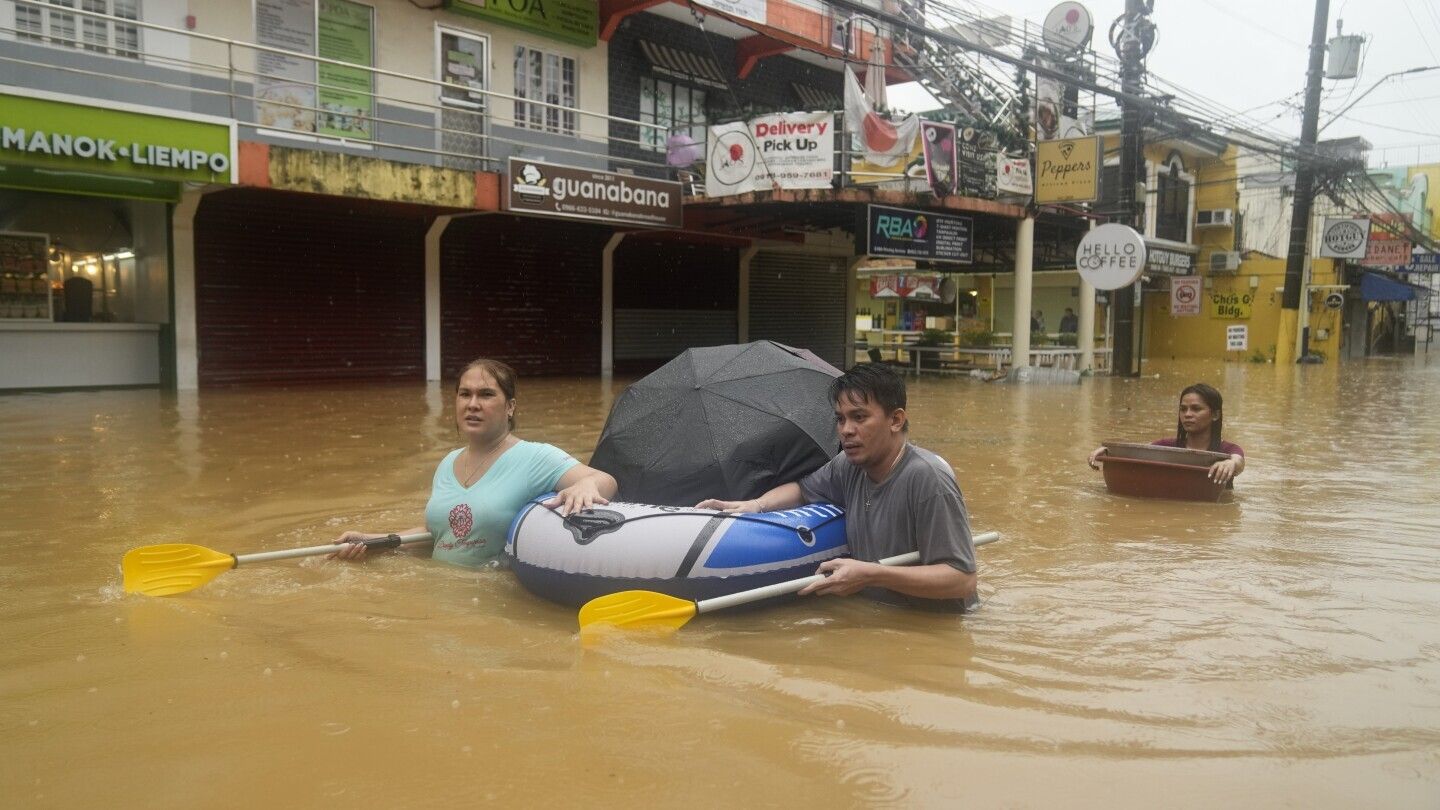
🇵🇭 The Philippines is in the middle of a political storm over billions of pesos gone missing in flood control projects. Lawmakers, contractors, even President Marcos’ cousin have been dragged into accusations of fake projects, kickbacks, and substandard work. The scandal cuts even deeper because the Philippines is battered by deadly floods almost every year, making the alleged theft of infrastructure money feel like a betrayal with life-or-death consequences. People are furious, with protesters calling on the military to ditch Marcos. That’s not a casual ask. In the Philippines, the armed forces have played kingmaker before.
This time, though, the generals aren’t budging. Defense Secretary Gilberto Teodoro Jr. and military chief Gen. Romeo Brawner Jr. said flat-out that the military isn’t a political tool. They’re sticking with the constitution and the president, even as he scrambles to contain the fallout, freezing flood funds, setting up an independent commission, and firing his public works secretary. The corruption scandal is massive, but for now, Marcos still has the one thing he needs most: the loyalty of the armed forces.
🇵🇸 Israel’s latest offensive on Gaza City left at least 32 people dead on Saturday, according to hospital officials at Al-Shifa. Twelve of the victims were children. One strike in the Sheikh Radwan neighborhood killed a family of 10, including a mother and three children. Among the dead was Mohammed Ramez, a player for Gaza’s Al-Helal Sporting Club. The attacks hit several residential areas overnight into the morning, deepening fears for the hundreds of thousands still trapped in the city under siege conditions and food shortages.
Saturday’s strikes added to the mounting civilian toll, with the high number of child casualties once again spotlighting how families are paying the steepest price of the war. Strikes on homes and neighborhoods highlight the collapsing humanitarian situation, where hospitals, infrastructure, and basic services are already stretched to breaking point. The rising child casualties, in particular, have drawn attention to the human cost of Israel’s intensified campaign in Gaza.
World Watch
Two deadly boat accidents hit northwestern Congo this week, killing at least 193 people and leaving scores missing. On Wednesday, a motorized boat capsized in Basankusu territory, taking the lives of 86 people, many of them students. A day later, another vessel carrying nearly 500 passengers caught fire and sank in Lukolela territory, killing 107 and leaving more than 140 unaccounted for. Survivors were pulled from the Congo River, but the numbers tell the story, these were some of the deadliest accidents the region has seen in years.
Tragedies like this aren’t rare in the Democratic Republic of Congo. The Congo River is the main artery in a country where roads are few and expensive, so people crowd onto old, poorly maintained wooden boats because they have no better option. Overloading is routine, life jackets are almost nonexistent, and many trips happen at night, when rescue is nearly impossible. The result is a cycle of disasters like this week’s, where necessity collides with neglect and hundreds of lives are lost in an instant.
Today in What the Hell
United Airlines Flight 32 from Tokyo to Cebu had a midair scare Friday when cockpit systems flagged a possible cargo hold fire just 50 minutes into the journey. The Boeing 737-800 diverted to Kansai Airport, landing safely around 7 p.m. local time. Emergency slides were deployed, and all 142 passengers and crew evacuated as fire trucks lined the runway. Two passengers suffered minor injuries during the slide evacuation, but there were no serious medical issues.
Once on the ground, the drama took a twist: no fire was ever found. United later confirmed that maintenance crews detected no flames or damage, suggesting a faulty sensor triggered the emergency response. The incident underscores how sensitive, and sometimes misleading, safety systems can be. But it also showed the flip side: the airline and crew treated the warning as real, executed the playbook, and got everyone off safely. It’s a reminder of why air travel is still considered the safest mode of transportation, even when the alarms prove false.

That’s all folks
That’s all for today. The throughline across these stories is how fast things can shift, whether it’s politics on the streets of London, protests reshaping Nepal, or alarms forcing a jet to slide evacuations. The world isn’t slowing down, but staying sharp on the details helps cut through the noise.
See you back here tomorrow.