- News Without BS
- Posts
- Threads That Reshape Power
Threads That Reshape Power
From sewing machines to statecraft, small shifts keep rewriting history.

Devin
September 10, 2025
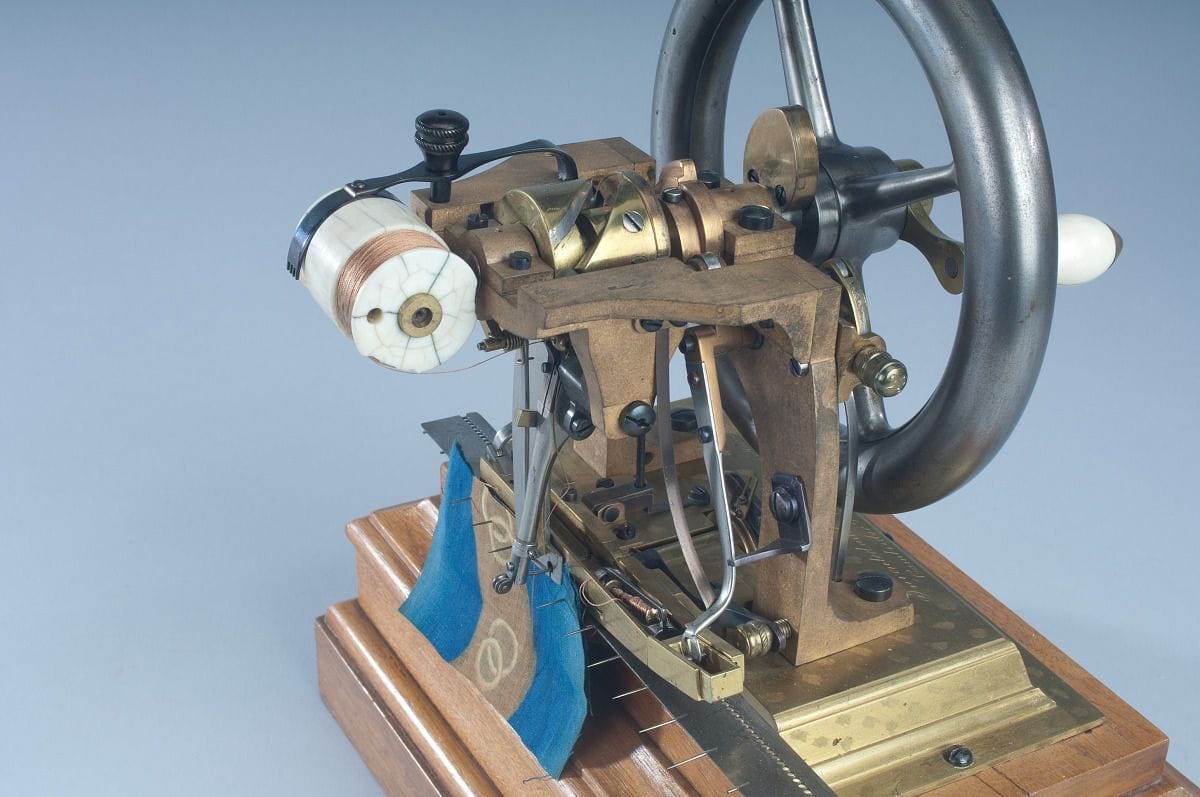
On September 10, 1846, Elias Howe patented the sewing machine. That was 179 years ago, and it rewired both factory floors and kitchen tables.
A small piece of machinery ended up reshaping entire economies. It’s proof that shifts in power don’t always come from grand speeches or armies, but from tools that change how people live day to day.
Let's get into today's stories.
Israel Targets Hamas, Hits Diplomacy
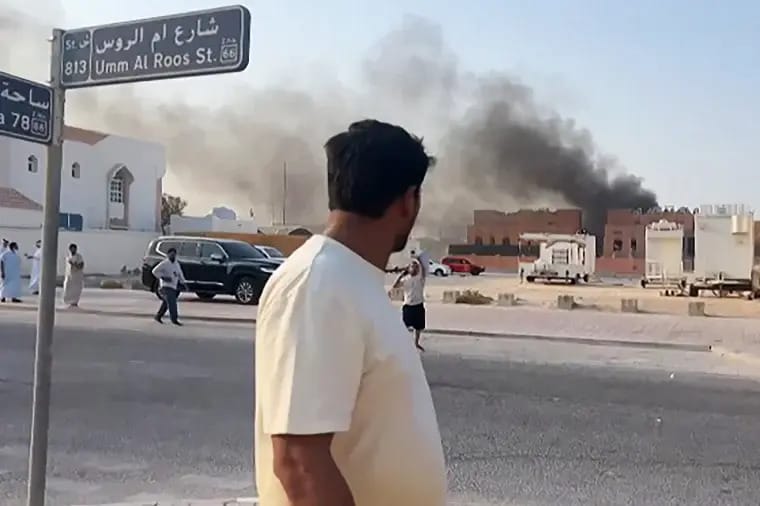
Israel carried out an airstrike in Doha, Qatar on Tuesday, targeting Hamas leaders who were in the capital for ceasefire talks. Hamas quickly claimed its senior leadership survived, though five of its members were killed along with a Qatari security officer. Qatar called the strike “cowardly,” stressing that it hit a residential area and put civilians at risk. The attack was unprecedented, not just because it targeted Hamas officials abroad, but because it happened in Qatar, a close U.S. partner that hosts one of the largest American military bases in the Middle East.
The timing couldn’t have been worse. Washington has been leaning on Qatar to mediate a Gaza ceasefire and hostage deal, with meetings in Doha taking place just a day before the strike. Now, those talks are suspended. The U.S. is also left trying to square the circle: the White House condemned Israel’s unilateral move, but reports suggest Trump personally gave Israel a green light. His messaging since has been contradictory, at times defending the goal of “eliminating Hamas,” while also saying he “feels very badly” that the strike happened in Doha.
For Israel, Prime Minister Netanyahu insists the attack was a fully independent operation, even as his government signaled acceptance of the U.S. ceasefire plan. The mixed signals reflect a deeper problem. Israel hit Hamas leaders in the very country trying to negotiate peace, undermining its own chances at a deal and dragging the U.S. into an uncomfortable position. The strike didn’t just fail to eliminate Hamas’s leadership, it may have sabotaged the last diplomatic lifeline.
Rapid Fire
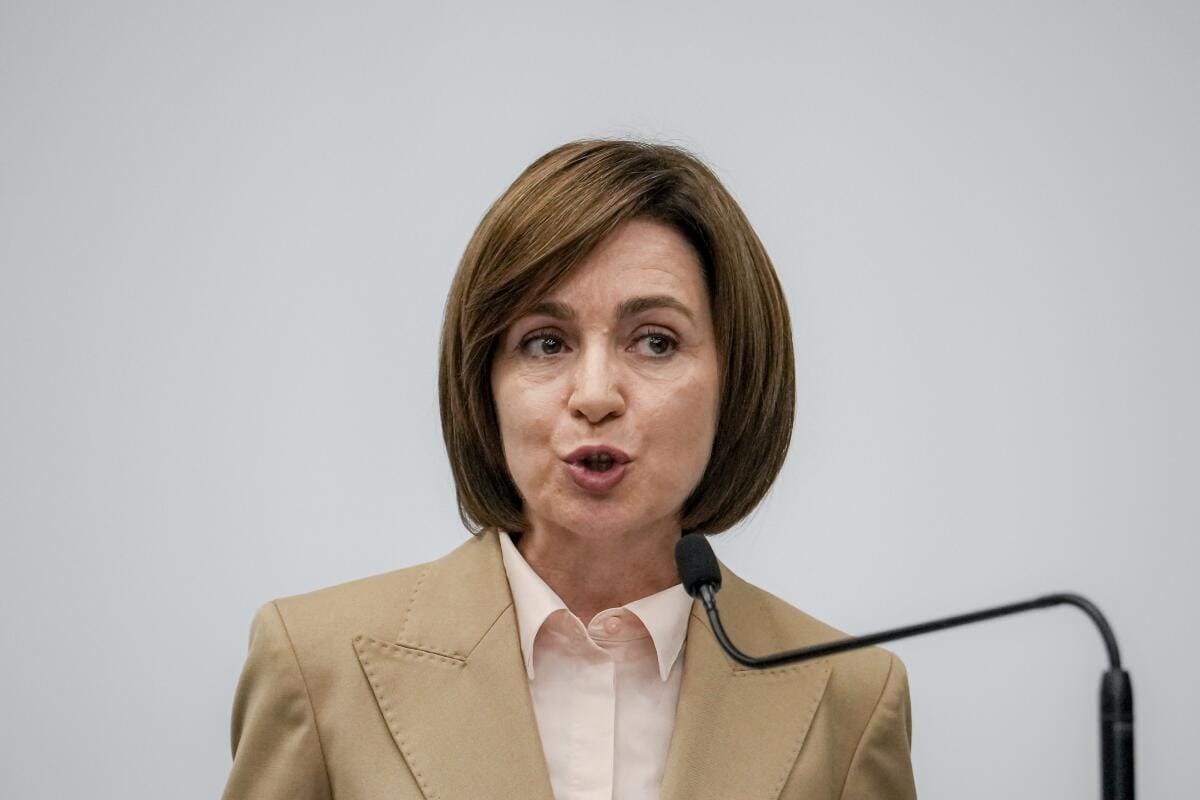
🗳️ Moldova’s president is sounding the alarm. Maia Sandu told European lawmakers this week that her country faces an “unlimited” Russian campaign to hijack the September 28 parliamentary elections. She warned it’s a “race against time” to defend Moldova’s democracy as Moscow pours money and resources into trying to pull the small European nation back into its orbit. Security officials say Russia has already funneled around $55 million into the effort, bankrolling pro-Russian candidates, buying votes, and flooding the information space with propaganda.
The tactics aren’t subtle. Investigators say Kremlin-linked groups are running disinformation campaigns, cloning news sites, and even using AI deepfakes to smear Sandu directly. Fake videos and fabricated stories are spreading across Moldovan social media at scale. Add in illicit crypto financing and covert pressure on electoral infrastructure, and you’ve got a hybrid playbook lifted straight from Russia’s influence operations in Ukraine and beyond. With elections now weeks away, this vote has become more than a domestic contest. It’s a frontline test of whether a small democracy can withstand the full weight of Russian interference in 2025.
📱 Nepal’s Prime Minister KP Sharma Oli just quit after the country’s biggest youth uprising in decades. The trigger was a sweeping ban on social media, 26 platforms including Facebook, WhatsApp, and YouTube, because companies refused to register under a new law. In a country where 80 percent of internet traffic flows through those apps, it was like pulling the plug on daily life. Gen Z hit the streets, furious not only about losing their digital lifeline but also about years of corruption and economic frustration. At least 19 people were killed as protests turned violent, with parliament torched and ministers resigning before Oli finally did the same.
The government eventually reversed the ban, but the damage was done. What began as anger over blocked apps became a generational revolt against a political class seen as corrupt and out of touch. It’s part of a larger regional trend where young people are proving they’re not just online but organizing offline too. Nepal’s unrest is a reminder that when you cut people off from their platforms and give them nothing but broken promises, they’ll find another way to make themselves heard.
☢️ After months of rising tension, Iran just struck a deal with the UN’s nuclear watchdog. In Cairo, Iranian Foreign Minister Abbas Araghchi, Egypt’s top diplomat Badr Abdelatty, and IAEA chief Rafael Grossi signed an agreement to restart cooperation. That includes reopening the door to nuclear facility inspections, something Iran had scaled back after U.S. and Israeli strikes. The fact this meeting happened in Egypt is notable. Cairo has been carving out a role as a go-between in a region where most players aren’t on speaking terms.
The backdrop here is ugly. Israel and Iran recently fought a 12-day air war, and Iran suspended cooperation with the IAEA as leverage in its standoff with the West. That left inspectors locked out, fueling worries about what was happening inside Iran’s nuclear program. Grossi has warned the stakes are sky-high. Not just for diplomacy but for nuclear safety. So while this agreement doesn’t solve everything, it’s a meaningful reset. In a Middle East rattled by war, even a modest step back toward oversight counts as a breakthrough.
World Watch
Brazil’s President Luiz Inácio “Lula” da Silva isn’t new to fights like this, and he’s made it clear he wants Brazil less dependent on the United States. Now, with Trump slapping 50 percent tariffs on Brazilian exports, Lula is using the moment to double down on BRICS, his club of emerging powers alongside China, India, Russia, and South Africa. At this week’s summit, he called tariffs “blackmail” and pushed for tighter trade ties within the bloc. He and India’s Prime Minister Modi even set a goal of nearly doubling bilateral trade by 2030, framing intra-BRICS deals as a shield against U.S. pressure.
The bigger context: BRICS nations have been inching toward financial independence from the dollar and talking up alternatives like a shared currency. Trump’s tariff blitz only fuels that push. For Lula, tighter BRICS coordination isn’t just an economic hedge, it’s a political statement that Brazil won’t be strong-armed by Washington. The irony is that the more the U.S. leans on tariffs to make its point, the more Lula and his partners have reason to speed up integration. Instead of isolating Brazil, Trump may be helping cement BRICS as a counterweight in global trade.
Today in What the Hell
Amnesty International just dropped a bombshell report: Pakistan is running one of the world’s most expansive surveillance systems outside of China. Its spy agencies can tap into at least 4 million mobile phones at once through a system called LIMS, while a Chinese-designed firewall known as WMS 2.0 can inspect and block 2 million internet sessions in real time. Together, they let authorities eavesdrop on calls, track people’s locations, and censor social media on a massive scale. Officially, Pakistan’s defense and intelligence agencies deny they even have these tools. In reality, the telecom regulator admitted it ordered carriers to install them.
The scale is staggering and it didn’t happen in a vacuum. Amnesty says companies from China, Europe, North America, and the UAE helped build and enable this system, naming firms like Geedge Networks, Utimaco, Datafusion, and Niagara Networks. That makes the problem global, not just local. The result is a country where dissent can be silenced at the flip of a switch, with privacy rights and free expression sacrificed in the process. Amnesty’s blunt assessment: Pakistan now sits alongside China in operating one of the most intrusive digital surveillance networks on Earth.
That’s all folks
That’s a wrap for today. Some days it feels like history is sprinting, other days like it’s crawling, but it’s always moving. Thanks for reading, and see you back here tomorrow.